Ethan Kassel and Kerry Boland

Garden State ElderCare

Ethan Kassel and Kerry Boland

Co-Founders

Meet Ethan Kassel and Kerry Boland. As the visionary Co-Founders of Garden State ElderCare, Ethan and Kerry have dedicated their professional lives to transforming the landscape of in-home senior care. With a combined history of over 60 years in the home care industry—each bringing more than 30 years of specialized experience—they have established a premier agency designed to support the multifaceted needs of aging individuals. Recognizing that true quality care requires a multi-dimensional approach, Ethan and Kerry united their complementary backgrounds to create an organization that prioritizes dignity, safety, and comprehensive well-being. By merging clinical social work with expert nursing oversight, these two leaders have developed a highly effective model for home care that sets the standard for excellence across New Jersey, allowing seniors to enjoy their golden years with absolute grace and comfort.


A Powerful Partnership of Clinical Social Work and Skilled Nursing

The foundational strength of Garden State ElderCare lies in the brilliant synergy between Ethan’s social work expertise and Kerry’s medical proficiency. The aging process introduces an intertwined web of medical, emotional, and logistical challenges that cannot be solved by one discipline alone. By combining the perspective of a Licensed Clinical Social Worker with the rigorous clinical oversight of a Registered Nurse, Ethan and Kerry ensure no aspect of a client’s well-being is overlooked. While many agencies focus solely on basic daily assistance, this dynamic duo has built a framework addressing the holistic needs of the individual. Kerry oversees the physiological requirements, ensuring optimal physical health and medication compliance, while Ethan addresses the psychosocial elements, managing emotional transitions and family dynamics. Together, they deliver a deeply balanced care experience, preventing vulnerable seniors from slipping through the cracks.


Ethan Kassel: Master of Social Work and Clinical Excellence

Ethan Kassel brings a profound depth of knowledge regarding the psychological and social aspects of aging. Holding a Master’s in Social Work and practicing as a Licensed Clinical Social Worker, Ethan possesses the advanced clinical training necessary to navigate the emotional complexities accompanying the senior years. Transitioning into need-based care can be an overwhelming experience for both the individual and their family, frequently bringing about feelings of grief and a perceived loss of independence. Ethan’s rigorous educational background empowers him to provide expert counseling, crisis intervention, and long-term care planning. He excels at assessing the entire family system, facilitating productive communication, and crafting tailored care strategies promoting autonomy and emotional resilience. His clinical insight ensures every care plan is rooted in deep empathy, guaranteeing clients feel truly heard and respected throughout their aging journey.


Championing Specialized Dementia and Memory Care

Beyond his foundational social work credentials, Ethan is a Certified Dementia Care Specialist and a Certified Dementia Care Partner. Cognitive decline, including Alzheimer’s disease and various forms of dementia, requires a highly specialized approach going far beyond standard companion care. Ethan has dedicated a significant portion of his career to mastering the intricacies of memory care, studying specific behaviors associated with cognitive loss such as wandering and agitation. He trains the agency's caregivers in evidence-based techniques that minimize anxiety, reduce behavioral triggers, and foster a peaceful environment for individuals experiencing memory loss. By focusing on the person rather than the disease, Ethan ensures clients receive care validating their current reality and preserving their inherent dignity. His specialized training allows Garden State ElderCare to safely manage complex cognitive cases right in the comfort of the client’s own home.


Professional Affiliations and Industry Leadership

Ethan’s commitment to advancing the field of eldercare extends well beyond the daily operations of Garden State ElderCare. He is a prominent member of several esteemed professional organizations, including the National Association of Social Workers. This vital affiliation keeps him at the absolute forefront of the latest academic research and clinical best practices within the profession. Furthermore, his membership in the Executives Association of New Jersey and the Entrepreneurs Association of New Jersey highlights his strong business acumen and robust leadership capabilities. By staying actively engaged with other business leaders, advocates, and healthcare professionals throughout the state, Ethan ensures his agency remains an innovative, forward-thinking organization capable of adapting to the ever-evolving healthcare landscape and consistently delivering the highest possible caliber of service.


Kerry Boland: The Heart of Expert Nursing and Medical Oversight

Complementing Ethan’s psychosocial expertise is Kerry Boland, a highly accomplished Registered Nurse serving as the clinical cornerstone of Garden State ElderCare. With over three decades of nursing experience strictly dedicated to the home care sector, Kerry brings an unparalleled level of medical proficiency to the agency’s daily operations. She understands that safely managing complex health conditions at home requires continuous physical assessment and a highly proactive approach to wellness. Kerry is responsible for conducting comprehensive initial health evaluations, developing detailed care plans, and closely supervising the home health aides executing these plans daily. Her extensive background in nursing allows her to quickly identify subtle changes in a client’s physical condition. This facilitates early medical interventions that can prevent hospital readmissions and ensure the highest levels of physiological stability for every individual.


Elevating the Standard of Aging in Place

Both Ethan and Kerry share a fundamental belief that seniors thrive best when allowed to age gracefully in the comfort, safety, and familiarity of their own homes. The institutionalization of the elderly often strips them of their preferred daily routines and individual agency. Through Garden State ElderCare, these two Co-Founders have created a robust infrastructure making aging in place a safe and realistic option, even for individuals with extensive medical or cognitive needs. They meticulously coordinate with primary care physicians, medical specialists, and physical therapists to ensure the home environment fully supports the client’s overall health goals. By integrating advanced medical oversight with compassionate daily living assistance, Ethan and Kerry have effectively bridged the gap between clinical healthcare facilities and the warmth of the private home, offering seniors the ultimate combination of professional medical care and personal freedom.


A Holistic, Family-Centered Philosophy

The journey of eldercare deeply impacts spouses, adult children, and extended family members who often struggle to balance caregiving with their own personal lives. Ethan and Kerry intentionally designed Garden State ElderCare to support the entire family unit. They know firsthand the immense toll that caregiver burnout, guilt, and physical exhaustion can take on a family’s health. Therefore, they prioritize clear, ongoing communication with relatives, providing them with regular status updates, educational resources, and much-needed respite care. Ethan’s clinical social work skills help families navigate difficult emotional decisions regarding end-of-life care and lifestyle transitions. Meanwhile, Kerry’s nursing expertise provides relatives with the absolute reassurance that their loved one’s medical needs are being handled by a consummate professional. Together, they lift the heavy burden of caregiving off the shoulders of family members, allowing them to return to their primary roles.


Partner With Garden State ElderCare Today

To get started with Ethan and Kerry and their excellent team, give us a call today. We look forward to showing you the Garden State ElderCare difference!

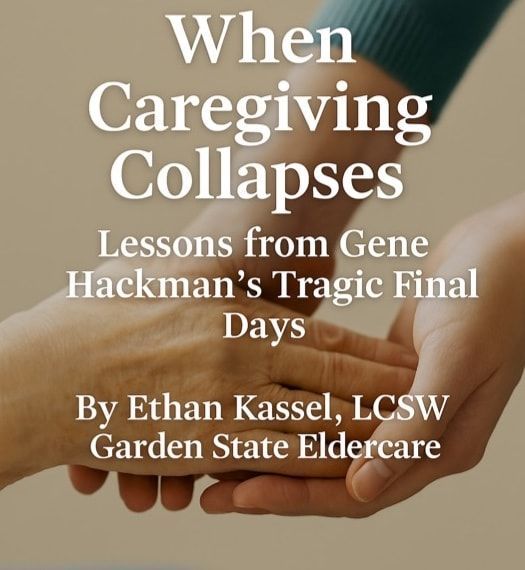
Text graphic on caregiving collapse, with hands holding hands in soft tan and green tones
July 8, 2026
By Ethan Kassel, LCSW – Garden State Eldercare Published: April 5, 2025 The heartbreaking deaths of actor Gene Hackman , 95, and his wife Betsy Arakawa , 65, sent shockwaves through the caregiving and eldercare communities. While best known for his legendary Hollywood career, Hackman spent his final years battling Alzheimer’s disease, under the primary care of Arakawa. On February 26, 2025, both were found deceased in their Santa Fe home. Arakawa had succumbed to hantavirus pulmonary syndrome , a rare and fatal illness linked to rodent exposure. With her sudden death, Hackman—without his caregiver or support system—passed away shortly after from heart disease, with Alzheimer’s as a contributing factor. As a licensed clinical social worker and co-founder of Garden State Eldercare, I was deeply affected by this tragedy. It inspired this, my first blog, to reflect on what could have been done differently from a geriatric care management and home care perspective. 1. Create a Comprehensive Care PlAN Every care situation should have a structured, written plan in place—not just for the client, but also for the caregiver. This includes identifying backup care providers (professional or family), outlining routines, managing medications, and assigning responsibilities. In emergencies, a comprehensive plan ensures no one is left without support. 2. Monitor Health for Both Client and Caregiver Caregivers often put their own health last. But in cases like Arakawa’s, early detection of symptoms might have prompted timely intervention. Routine wellness checks for both the elderly individual and the caregiver can prevent avoidable medical crises. 3. Provide Support and Respite for Caregivers Caregiving is demanding. Without adequate respite, even the most devoted caregivers face burnout or health decline. Families and professionals must prioritize scheduled relief , caregiver training, and access to emotional support resources. As Emma Heming Willis—wife of Bruce Willis—recently said, “Caregivers need care too.” 4. Build a Broader Support Network Care should never fall on one person alone. A well-rounded support network—including family, friends, neighbors, and home care professionals—can provide day-to-day assistance, monitor changes, and intervene when needed. 5. Be Prepared for Emergencies Tragedy often strikes without warning. Every household with a high-need elder should have an emergency action plan: A list of contacts Medical and legal documentation Emergency medical instructions A designated secondary caregiver This level of preparation can make all the difference when unexpected circumstances arise. Final Thoughts This tragedy highlights a harsh truth: when caregiving systems fail, the consequences can be devastating. But it also gives us an opportunity to learn—and to act. At Garden State Eldercare , our mission is to help families create sustainable, safe, and supportive care environments. Whether you’re planning for a loved one’s future or navigating care today, I encourage you to revisit your current plans, ask the tough questions, and ensure no one—caregiver or client—is left vulnerable. Thank you for reading. – Ethan Kassel, LCSW Co-Founder, Garden State Eldercare

Older Americans Month logo with green and purple figures and text “Flip the Script on Aging: May 2025”
July 8, 2026
Celebrating Older Americans Month: Supporting Independence at Home with Garden State Eldercare By Ethan Kassel, Garden State Eldercare May is Older Americans Month, a time to recognize the countless contributions of our nation’s seniors and to reaffirm our commitment to helping them live with dignity, safety, and independence. At Garden State Eldercare, we believe aging in place should be a choice, not a challenge. As more older adults choose to remain at home, it’s critical to understand the concerns they face—and how we can help. Top Concerns for Seniors Living at Home Safety and Fall Risks Falls are one of the leading causes of injury among seniors. Uneven flooring, poor lighting, and bathroom hazards increase the likelihood of accidents at home. Social Isolation Loneliness can severely impact mental and physical health. Many seniors living alone experience isolation, especially after losing a spouse or when family members live far away. Managing Health Conditions Chronic conditions like diabetes, heart disease, and arthritis require consistent monitoring, medication management, and often help with daily living activities. Cognitive Decline Memory issues, confusion, or early signs of dementia can make it difficult for seniors to manage bills, appointments, and household tasks, putting them at risk. Caregiver Burnout Family members often step into caregiving roles without support, leading to emotional, physical, and financial strain. How Garden State Eldercare Helps Home Safety Assessments and Support We evaluate the home environment and provide recommendations to reduce fall risks, improve lighting, and ensure accessibility. Companionship and Engagement Our caregivers offer meaningful companionship, helping to combat loneliness through conversation, hobbies, and outings. Health and Medication Management Through skilled caregivers and coordinated oversight, we assist with medication reminders, chronic condition monitoring, and wellness checks. Specialized Memory Care We train our staff in dementia care strategies to support clients with Alzheimer’s or cognitive decline, focusing on safety, comfort, and routine. Relief for Family Caregivers Whether through hourly respite care or long-term support, we give family caregivers the chance to rest and recharge, knowing their loved one is in capable hands. A Commitment to Aging with Grace Older Americans Month reminds us to value, support, and protect the aging members of our community. At Garden State Eldercare, we’re proud to be part of that mission every day—helping seniors live safely and comfortably in the place they know best: home. 

Man standing outside a hospital entrance, looking up at the building sign.
July 8, 2026
By Ethan Kassel Introduction As a professional in the eldercare field, I’ve spent years helping families navigate the complexities of aging, caregiving, and our healthcare system. I’ve counseled adult children through emotional decisions, worked with hospitals on discharge plans, and advocated for better communication across the continuum of care. I thought I understood what families go through—until it was my turn. Recently, I traveled from New York to California to be with my parents during a planned surgery. I expected to be helpful, but I quickly realized how difficult it can be to know what to expect after surgery for my mother. Even being in one of the best institutions in the country, the experience was challenging—reminding me that no system is immune to breakdowns in communication or moments of uncertainty. Seeing the System as a Son, Not a provider From the moment I stepped into the hospital, I saw everything with new eyes—not as a provider, but as a son . The clinical language, the constant rotation of professionals, the gaps in communication—all things I used to explain to clients—suddenly became my reality. I found myself frustrated, overwhelmed, and deeply emotional. This wasn’t someone else’s parent. This was mine. The Discharge Process: A Test of Patience and Advocacy When discharge day arrived, I saw firsthand how difficult the transition can be, even when you know what questions to ask. Discharge instructions were rushed. Medications were changed without full explanation. Arranging for post-acute rehab felt like solving a puzzle with half the pieces missing. Even with my experience, I had to fight for clarity. I thought about all the families who don’t know what to ask, who accept what’s given, and who leave the hospital with a sinking feeling that something’s not right. What I Learned This experience changed me. It didn’t teach me something new about the eldercare system— It reminded me that behind every intake form is someone overwhelmed by the challenge of navigating elder care for someone they love, regardless of how competent the provider, families often feel lost. Good communication is everything. And that empathy isn’t a bonus—it’s the core of this work. Closing Thoughts If you’re a fellow professional in elder care, I encourage you to walk a day in the shoes of your clients. Ask more questions. Assume less. Slow down. And if you’re an adult child going through it yourself, know this: it’s okay to be overwhelmed, and you’re not alone. Being both provider and participant gave me a deeper appreciation for the families we serve—and a renewed commitment to making the process a little more human.